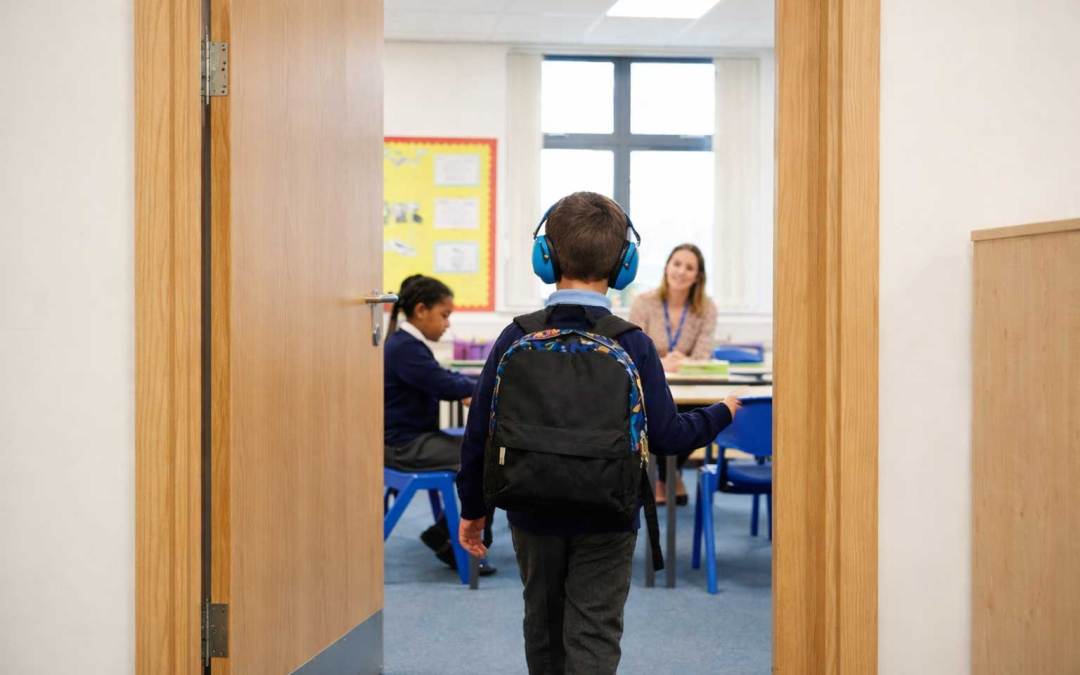
In schools and childcare centers, doors are everywhere and most days they’re effectively invisible. Then an injury happens and suddenly that “ordinary” door becomes the dramatic center in a spiral of incident reports, parent meetings, insurance calls, and in some cases, even litigation.
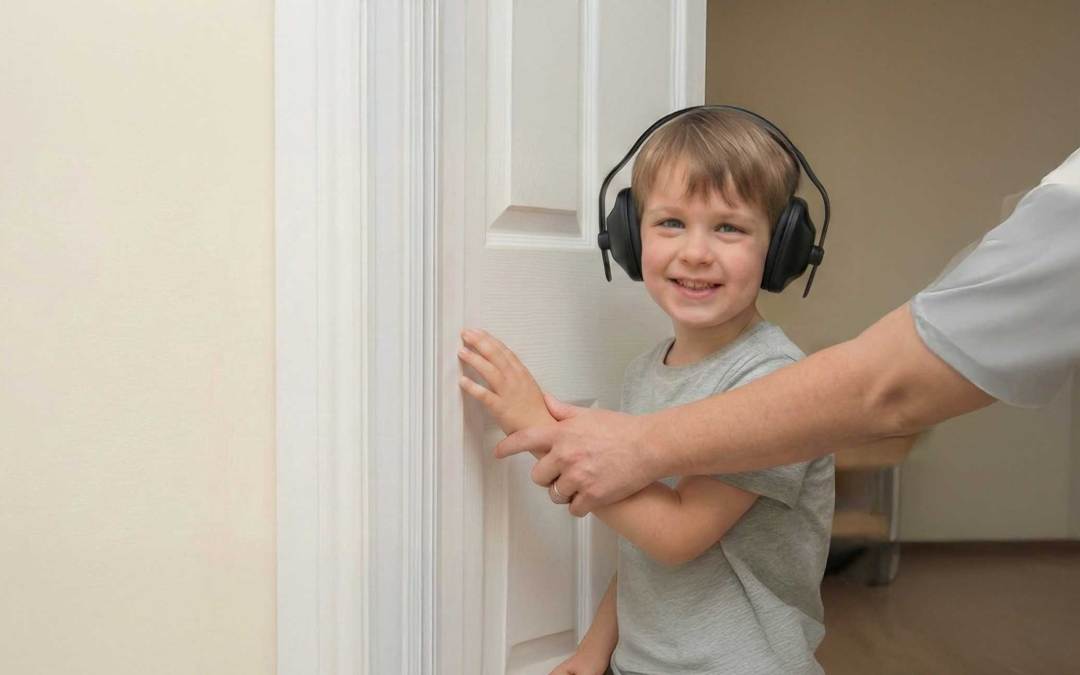
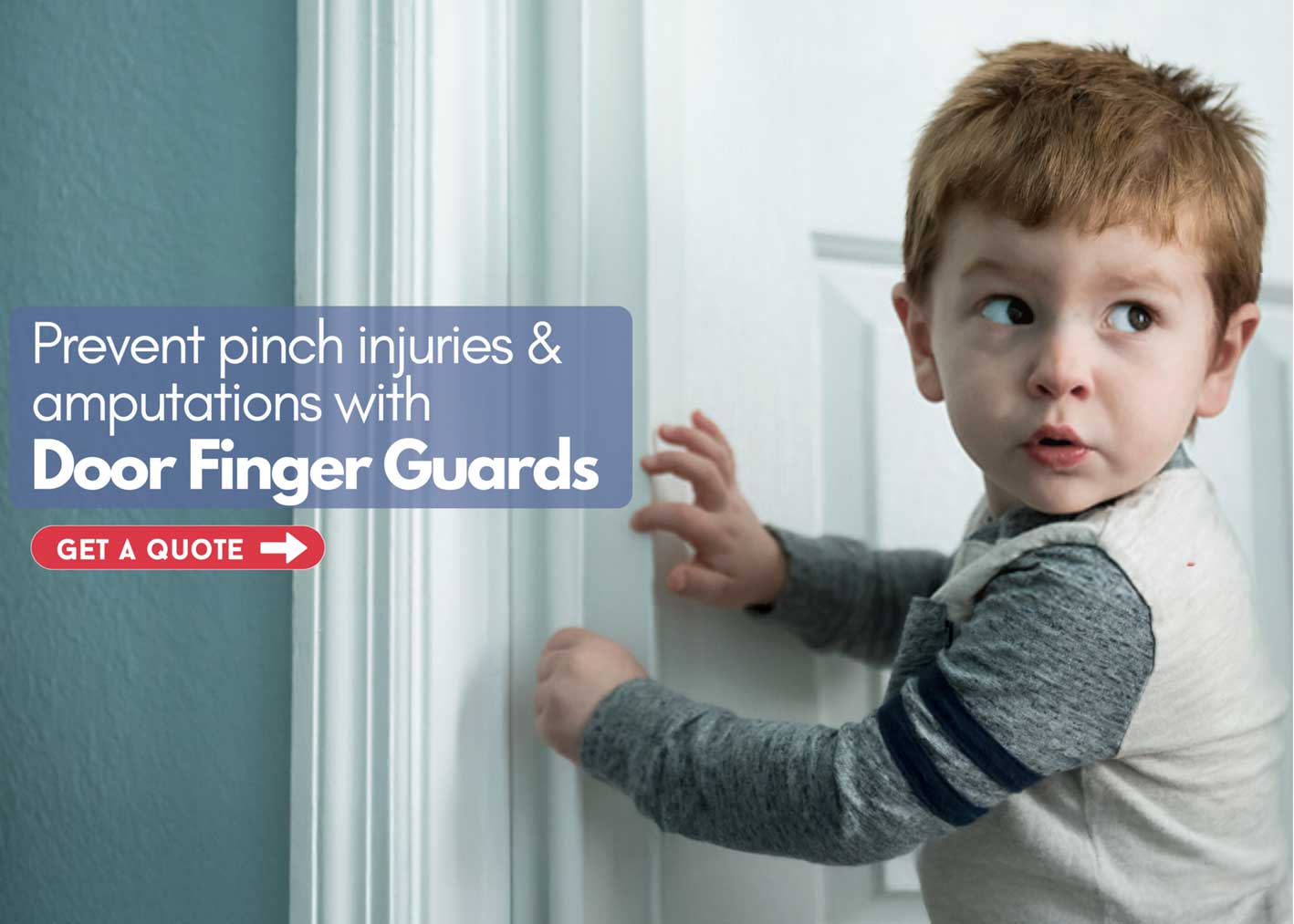
Door-related finger injuries are not rare. Indeed, around 30,000 to 40,000 children in the US alone suffer finger injuries from being trapped in doors every year. They can be severe too, especially when fingers are caught on the hinge side. Research and clinical reporting consistently describe doors as a common cause of fingertip and nail bed trauma in children, including injuries serious enough to require serious surgical repair.
Pediatric health guidance from the American Academy of Pediatrics also notes that children’s fingertips are frequently smashed in closing doors.
For facility leaders, the stakes are simple:
- The human cost: pain, distress, and sometimes permanent damage.
- The operational cost: staff trauma, disruption, documentation, follow-up, and training.
- The legal/financial cost: claims, higher premiums, reputational risk, and lawsuits.
It is a serious problem rarely mentioned in the mainstream press. It is also a problem with a deceptively dense legal footprint. This guide breaks down how door injuries turn into lawsuits and what organizations can do both practically and proactively to reduce both injury risk and liability exposure.
Why door injuries become “high liability” incidents
A door injury can escalate fast because it sits at the intersection of three things liability cares about: foreseeability, severity, and preventability.
1) Foreseeability: the hazard is well-known
Finger-trapping at door hinges is a known risk in any environment where children are allowed to run free. When an incident is already widely recognized (and repeatedly documented), it becomes harder to argue it was “unpredictable.”
2) Severity: fingertip injuries can be medically serious
Even when the injury looks small, fingertip damage can be more than skin-deep (quite literally). While it might look relatively minor, it could involve nail bed injury, fractures, or even partial amputation and it might not be immediately obvious. Nail bed injuries sometimes require surgical repair, and “open” fractures can also raise risk of an infection.
3) Preventability: solutions are passive and straightforward
When a safety improvement is relatively low-cost and passive (meaning it does not rely on perfect behavior), organizations are more likely to be judged on whether or not they have implemented it.
Fingersafe’s door safety products are designed specifically to protect the hinge area where finger trapping happens, including push-side and pull-side guarding and full system sets.
How lawsuits happen after door injuries (and what tends to be alleged)
Be aware that this should not be classed as serious legal advice, rather as a practical overview of the patterns that show up when door injuries lead to claims.
In general, claims tend to focus on whether the organization:
- Failed to maintain a safe environment
- Ignored a known hazard
- Did not implement reasonable safeguards
- Did not supervise appropriately (where supervision is part of the duty of care)
- Did not respond properly after injury
Recent reporting shows how quickly a door injury can develop into a legal narrative, particularly when the injury is severe or the response is viewed as mishandled. For example, a January 2026 report describes a lawsuit alleging a student’s fingertip was severed in a school door incident and that the severed fingertip was not preserved, which the lawsuit claims affected reattachment options. Another report from October 2025 describes a lawsuit involving an alleged fingertip-severing injury in a special needs classroom setting.
These kinds of cases often argue some combination of:
- Negligence (reasonable steps were not taken)
- Policy failure (procedures existed but were not followed)
- Training/supervision gaps
- Environmental design not suited to the population served (especially relevant in special needs contexts)
Where door injuries most often occur
Door-related injuries tend to cluster around predictable “hot zones”:
High-traffic pinch points
- Classroom doors during transitions
- Bathroom doors
- Gym, cafeteria, and multipurpose room doors
- Fire doors and heavy self-closing doors
- Doors near drop-off/pick-up congestion
- Doors into sensory rooms or quiet rooms (often high emotion, high movement)
Doors with higher injury potential
- Heavy doors that close quickly
- Doors with powerful closers
- Doors that swing wide (creating larger hinge-side gaps)
- Double doors where children move unpredictably through one leaf
Why “rules and reminders” aren’t enough
Many facilities try to manage door safety with:
- Verbal reminders
- Signage
- “No slamming” rules
- Staff monitoring at choke points
These are all strategies that can help but they fail for one reason: they depend on constant perfection.
Children move quickly. Adults get interrupted. Transitions get chaotic. And in environments serving neurodivergent students or children with disabilities, reliance on verbal compliance can be unrealistic and unfair.
Passive solutions (guards that work regardless of attention span, stress level, or staffing ratio) tend to be more reliable and defensible.
The prevention stack: a practical hierarchy of controls
Facilities do not need a “one trick” fix but a dense prevention stack made up of 5 steps:
Step 1: identify hinge-side risk (simple audit)
A basic door safety audit can be completed in a couple of walkthroughs:
- List all doors children can access.
- Flag doors that are heavy, self-closing, or high-traffic.
- Flag doors used by younger children or special needs groups.
- Note doors with previous incidents or near-misses.
Then prioritize.
Step 2: install hinge-side finger protection (primary control)
Hinge-side protection is the core control because it directly addresses the most severe mechanism: finger trapping in the hinge gap.
Fingersafe’s complete door safety system includes options for the push side and pull side, and a “complete set” that covers the hinge area comprehensively.
Step 3: control door speed and slam potential (secondary control)
Where appropriate:
- Adjust closers so doors do not snap shut
- Add soft-close mechanisms
- Address latching issues that cause “slam to latch” behavior
- Install bumpers/stops where safe and code-compliant
Step 4: protect toes and lower edge hazards (supporting control)
Some environments also face toe injuries from heavy doors. Fingersafe offers toe protection designed to reduce that risk.
Step 5: procedures that stand up after an incident
When an injury occurs, what happens next often shapes liability exposure.
Facilities benefit from documented procedures for:
- Immediate first aid and escalation
- Parent/guardian communication
- Incident documentation and witness statements
- Equipment inspection (door closer function, hinge condition)
- Corrective actions (what changed after the incident)
The post-incident response that reduces harm (and legal fallout)
Facilities cannot undo an injury, but they can reduce harm and protect the child’s outcome by responding correctly.
Clinical guidance for fingertip injuries and amputations emphasizes taking immediate steps: cleaning, dressing, elevation, and careful handling of any amputated part (including keeping it protected and not in direct contact with ice).
Operationally, facilities should also be prepared to:
- Escalate quickly when there is severe bleeding, deformity, suspected fracture, or nail bed injury
- Document precisely what happened and when
- Preserve relevant details (which door, which hinge, which closer settings)
- Initiate corrective actions rapidly (especially hinge protection on similar doors)
A “liability-aware” checklist for facility managers
A liability-aware safety plan focuses on reasonable, documentable steps:
- Door inventory completed and updated annually
- Risk ranking (high traffic + heavy doors first)
- Hinge-side protection installed on priority doors
- Maintenance schedule for door closers and hinges
- Staff training for transitions and pinch-point supervision
- Incident response plan documented and practiced
- Corrective action loop (fixes after near-misses, not just after injuries)
This is the kind of paper trail that shows the organization treated the hazard seriously and acted proactively.
Doors are predictable hazards and that’s the point
Door injuries are often framed as “accidents.” But when a hazard is common, severe, and preventable, it becomes something else: a risk that can be designed out.
For schools, childcare centers, and youth facilities, the best time to address hinge-side hazards is before an accident happens. Because prevention is always better than cure. Fingersafe USA provides door finger protection designed to reduce hinge-side trapping risks in real environments (homes, schools, and childcare facilities) using solutions that are passive, durable, and straightforward to install.
Contact us today for a quote or expert help identifying the best door protection approach for your facility.