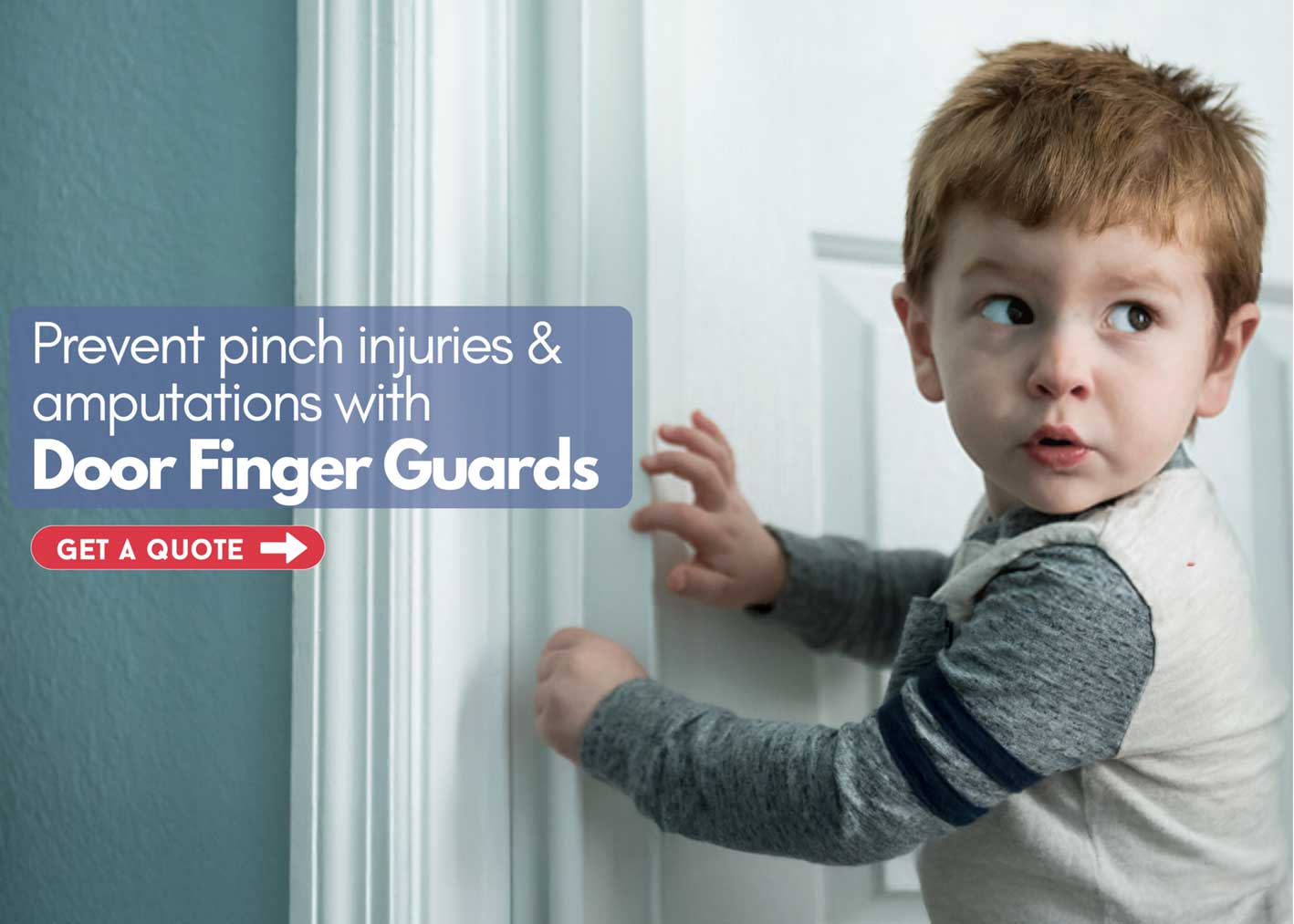
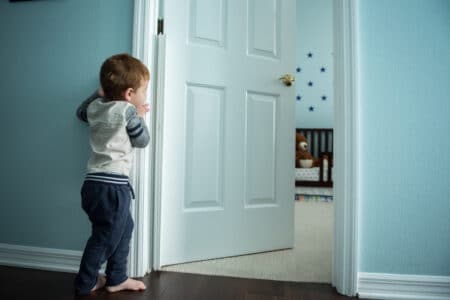
A door finger injury feels like a freak accident until a school or household sees the same incident pattern repeat. A child trails a hand along the frame. Another child swings the door shut. Someone tries to hold a door during a rush. A hinge gap turns into a trap in a fraction of a second.
These injuries are common in the United States. A national study using NEISS emergency department data estimated 1,392,451 children (age 17 and under) were treated in US emergency departments for door-related injuries from 1999 to 2008, averaging about one injury every 4 minutes. The most common mechanism was a pinch in the door.
The good news is that most of the highest-risk pinch points are predictable. The best fixes are, too. This guide lists the top 10 places kids get fingers caught in doors and the practical changes that reduce risk fast, for US homes, schools, and childcare centers.
The hinge side is the danger zone most people miss
Many people think the risk is where the latch clicks. In real injury data, the hinge side is often the bigger threat because the gap collapses quickly as the door closes. One widely cited study on door-slam injuries reported fingers were trapped on the hinge side in 57% of patients.
That is why the fixes below focus heavily on hinge-side protection and door-closing behavior.
1) Classroom doors during passing periods
Why it happens: Classroom doors cycle constantly during arrival, transitions, specials, and dismissal. Students bunch up at thresholds and hold doors for one another. In a crowded hallway, fingers drift toward frames and hinges without anyone noticing.
Fix it fast:
- Add hinge-side finger protection on high-traffic classroom doors, starting with younger grades.
- Adjust closers so doors do not snap shut.
- Set a simple routine: one student holds the door from the safe side, no hands near hinges.
2) Bathroom entry doors
Why it happens: Bathrooms are high-frequency and low-supervision. Doors open and close quickly, often with multiple students entering at once. The urgency factor is real, and it leads to rushed door swings.
Fix it fast:
- Prioritize hinge-side protection on bathroom entries near cafeterias, gyms, and main corridors.
- Add a “slow close” adjustment if a closer is present.
- If the door slams to latch, repair alignment so students do not have to force it shut.
3) Bathroom stall doors
Why it happens: Stall doors create repeat pinch points at the hinge side and along the closing edge. Kids also tend to test stall doors, swing them, or hold them while turning around.
Fix it fast:
- Use stall hardware that reduces pinch exposure, where possible.
- Teach one micro-rule: fingers stay off hinges and edges.
- Where stall design allows, consider edge guards or door buffers to reduce slam force.
4) Fire doors and heavy corridor doors with closers
Why it happens: These doors are heavier, often self-closing, and frequently used during transitions. The force and speed of closing can turn a minor pinch into a serious injury.
Fix it fast:
- Treat heavy self-closing doors as a priority category in every audit.
- Maintain closers and latches so the door closes smoothly, not violently.
- Add hinge-side protection that is compatible with fire-rated assemblies when required.
Fingersafe USA’s door safety system is designed to protect the hinge area and is approved for use in fire-rated door assemblies, with compliance testing references included in product specifications.
5) Doors to cafeterias, gyms, and multipurpose rooms
Why it happens: These doors see peak bursts of traffic. Kids move in groups. Someone always tries to “help” by pushing the door faster. Clusters form right where the hinge side is most dangerous.
Fix it fast:
- Add hinge protection on the top-used doors first, especially where younger grades pass through.
- Stagger releases if one doorway is consistently congested.
- Put staff in the best position, meaning where the hinge side is visible during peak movement.
6) Exterior doors to playgrounds and courtyards
Why it happens: Recess energy makes door use rough. Exterior doors are often heavier and may close faster because of closers, air pressure, or weather seals.
Fix it fast:
- Adjust closer speed and check that the door does not slam on windy days.
- Add hinge protection on the most-used recess doors.
- If kids are catching doors with their hands as they exit, change the flow so one person controls the door rather than multiple students trying to “save it” from closing.
7) Front entry doors and lobby doors at drop-off and pick-up
Why it happens: Adults are present, but attention is divided. Families carry bags, kids surge forward, and doors are constantly opening and closing. Small hands slip into the wrong place while adults juggle logistics.
Fix it fast:
- Protect hinge sides on the busiest entry doors.
- If doors are heavy, ensure closers are tuned to a controlled close.
- Reduce crowding at the threshold with a simple waiting line or hold point a few feet back.
8) Doors to special education rooms, sensory rooms, and support spaces
Why it happens: Transitions can be dysregulating. Some students may not respond consistently to verbal reminders, especially during stress, sensory overload, or emotional escalation. That makes passive safety essential.
Fix it fast:
- Treat these doors as high priority, even if traffic is less.
- Install hinge-side protection so the environment stays safer regardless of attention level.
- Reduce slam noise and force, since it can increase distress as well as injury risk.
9) Doors at home: bedrooms, bathrooms, and hallways
Why it happens: Most door pinch injuries for young children happen at home. In one US ED study, the youngest age group represented a large share of door-related injuries, with 41.6% of injured children age 4 or younger. At home, injuries often happen when a sibling closes a door, or a child follows an adult and tries to squeeze through behind them.
Fix it fast:
- Prioritize hinge protection on the doors kids use the most, especially bedrooms and bathrooms.
- Add door stops or soft-close solutions to reduce slamming.
- Create a habit: adults close doors slowly when small children are nearby.
10) “In-between” doors: closets, storage rooms, and utility spaces
Why it happens: These doors are often ignored until the moment a child explores them. They may have strong closing springs, tight frames, or less-maintained hinges. In schools, storage doors near classrooms are a sneaky risk during cleanup time.
Fix it fast:
- Keep non-essential utility doors closed and secured when possible.
- Add hinge protection if children can access the door.
- Repair sticky doors that require force to close, because force increases injury severity.
The fastest schoolwide approach: a 30-minute door audit
A school can reduce door injury risk quickly without overcomplicating the project. The key is prioritization.
Step 1: List the surge doors: Classrooms (younger grades), bathrooms, cafeteria, gym, playground, main corridors, and any heavy self-closing doors.
Step 2: Score each door 1 to 3 for these factors:
- Transition traffic
- Closing force (heavy, self-closing, slams)
- Age and support needs of students using it
- Any history of near-misses or injuries
Step 3: Fix the top five first: That usually means hinge protection plus closer tuning.
This works because door-related injuries are not rare anomalies. They happen frequently enough to show up as a national pattern in emergency department data.
Why passive protection beats reminders
Schools and homes often try signs and warnings first. The problem is timing. Door injuries happen in the fraction of a second when someone turns their head or a group surges forward. That is why hinge-side solutions matter. They reduce access to the pinch point regardless of behavior.
Fingersafe USA’s door safety system is designed to protect the full hinge area and allow normal door operation, and its product description emphasizes full-length coverage over the hinge side of the door.
When to treat a door injury as urgent
This is not medical advice, but it is worth repeating what pediatric guidance makes clear: fingertip injuries can involve the nail bed, tissues, and underlying bone. The AAP notes that deep cuts, blood under the nail, excessive swelling, or a finger that looks broken should prompt immediate medical contact, and nail bed injuries may need surgical repair to avoid deformity.
Prevention is the goal, but preparedness matters.
The takeaway
Kids get fingers caught in doors where traffic is high, attention is divided, and doors close with speed or force. In national US emergency department data, door-related injuries occur frequently enough to be measured in the millions over a decade, and the “pinch in the door” mechanism heads the list.
The smartest prevention plan is not complicated:
- Protect hinge sides on the highest-risk doors first.
- Fix slam conditions by tuning closers and latches.
- Keep routines simple and repeatable.
That is how schools and families reduce injuries quickly, without relying on perfect supervision or perfect timing.