A door isn’t only an entrance or exit. It is also a moving object that can creak, bang, rattle, or swing back or forward without warning.
Most people barely notice those sounds. For a child who is sensitive to sudden noise or movement, every trip through a doorway can feel unpredictable. The CDC notes that some autistic people have unusual reactions to how things sound or feel, although every child is different.
Sensory-friendly door safety isn’t about creating a silent building or assuming that all neurodivergent children have the same needs. It’s about removing avoidable surprises while keeping doors safe, accessible, and easy to use.
Start with the sound of the door
Stand near the doorway during a normal school day and listen. Does the door slam at the end of its closing cycle? Does the latch strike the frame sharply? Do loose hinges squeak? Does a panic bar rattle? Can a draft or pressure change pull the door shut unexpectedly?
These sounds can become so familiar that adults stop noticing them. A door safety assessment should therefore always consider noise and movement as well as visible damage.
Ask staff when the door is loudest and whether children avoid it, cover their ears or become anxious as they approach. Families and the children themselves may also be able to identify sounds that a short facilities inspection misses.
Slow the movement without compromising safety
A correctly adjusted closer can make a door’s movement smoother and more predictable. It can also prevent the final snap that turns an ordinary closure into a startling bang.
The solution isn’t to disconnect the closer, wedge a fire door open, or improvise with equipment that hasn’t been approved for the setting. Fire doors, security doors, and accessible routes have specific requirements. The U.S. Access Board’s accessibility standards include provisions for door closing speed, opening force, and usable hardware, while fire doors are subject to additional rules.
A qualified professional can check the closer, hinges, latch alignment, and surrounding air pressure. The aim is a door that moves consistently and closes securely without slamming.
Reduce sudden movement at the hinge
Quieter operation makes a doorway calmer, but it doesn’t remove the physical pinch point.
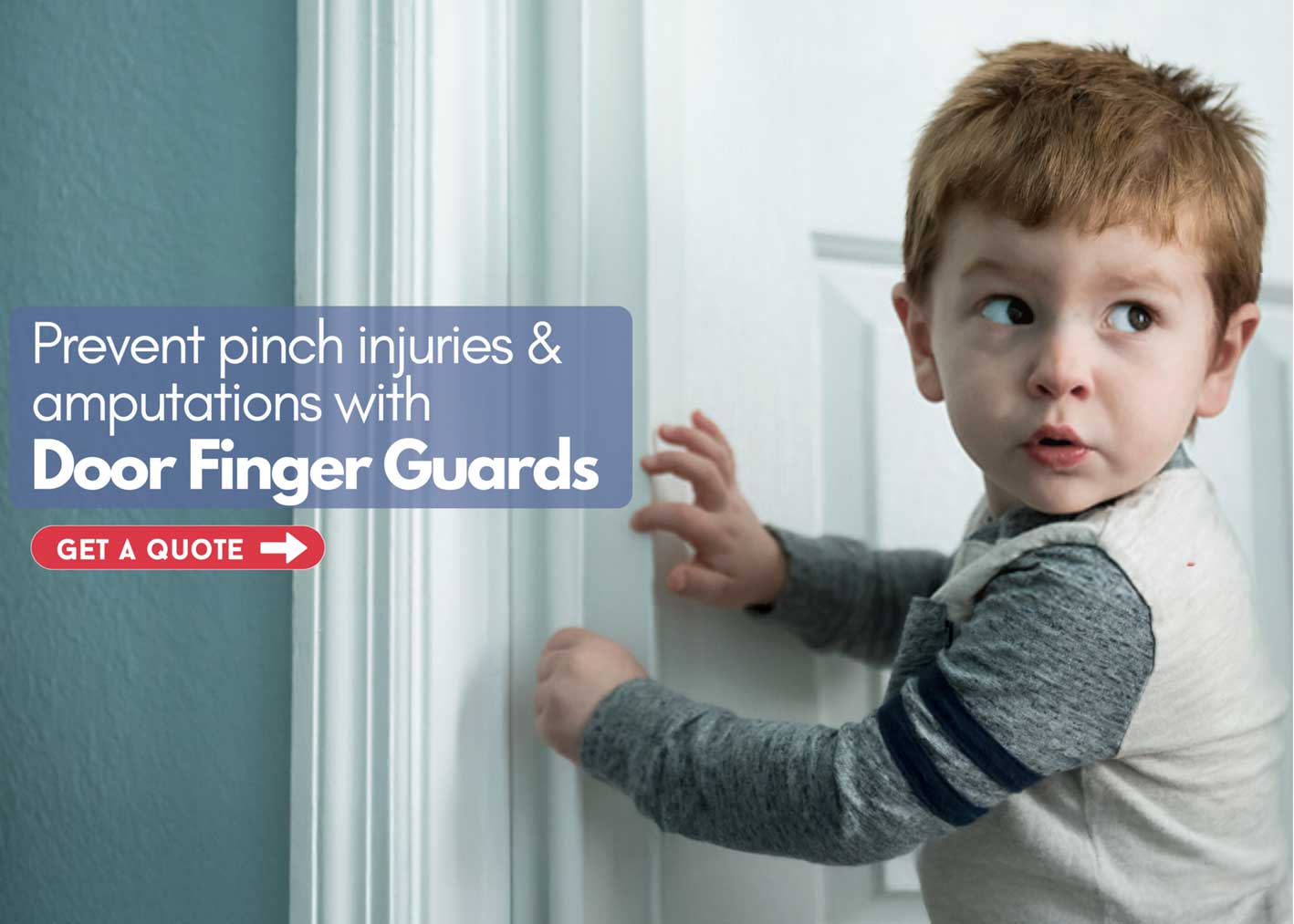
The hinge-side gap widens as the door opens and collapses as it closes. If a child places their fingers there while distracted, overwhelmed, or seeking sensory input, the result can be a serious crush injury.
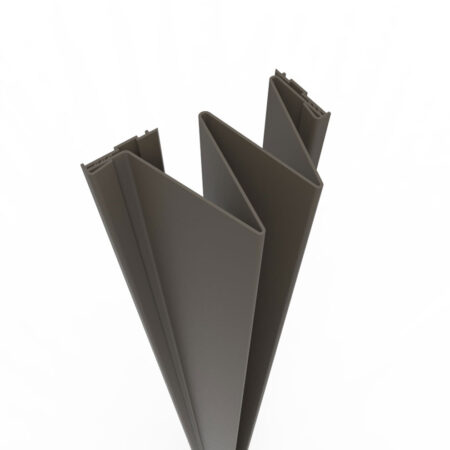
Commercial finger guards cover that gap while allowing the door to operate normally. Because they work passively, they don’t add another instruction for the child to remember. This approach can be especially valuable in classrooms, bathrooms, sensory rooms, and other high-use spaces.
Both sides of an accessible hinge may require protection, and the product should suit the door’s opening angle, construction, and fire rating.
Make transitions more predictable
Hardware matters, but the way people use a doorway matters too. Crowding, rushing, and repeated slamming can make using even a well-maintained door stressful.
Keep bags, furniture, and waiting students away from the swing path. Where appropriate, use a simple visual cue to show where to wait or which direction the door moves. If a noisy repair or temporary change is planned, give affected children advance warning when possible.
Staff can model a consistent routine for opening and closing the door. It should support children rather than become another compliance test. Environmental protection remains essential.
Review the doorway through the child’s experience
A door can pass a mechanical inspection and still be difficult for a particular child. One student may find the latch noise startling. Another may dislike the rush of air. Someone else may be comfortable with the sound but struggle when the door moves unpredictably behind them.
Ask, observe, and adjust. Sensory-friendly design works best when children, families, educators, and relevant specialists help identify the real problem instead of adults guessing.
Schools can explore Fingersafe USA’s commercial push-side and pull-side hinge protection as part of a wider door safety plan.
The goal isn’t a doorway that demands constant caution. It’s one that opens smoothly, closes calmly, and protects fingers automatically. When noise, slamming, and sudden movement are reduced together, the doorway becomes safer and far easier to navigate with confidence.