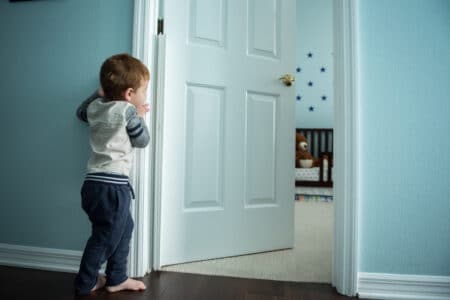
Most people think the dangerous part of a door is the closing edge, where the latch meets the frame. It makes sense. That’s the side everyone sees moving toward the jamb, and it is usually where parents and teachers tell kids to “watch your fingers.” But in many serious door finger injuries, the hinge side is the bigger problem.
That doesn’t mean the door edge is harmless. Fingers can absolutely be crushed on the latch side, especially when a door is slammed. But the hinge side is easier to miss, harder for children to understand, and often capable of trapping fingers with frightening force.
For schools, childcare centers, pediatric spaces, and busy homes, the practical question is not which side deserves attention. It’s which side should be protected first.
What is a door edge injury?
A door edge injury usually happens on the latch side of the door. This is where the door closes into the frame. A child’s finger may be trapped between the door edge and the jamb or hit by the edge as the door swings shut.
These injuries often happen when:
- A child is holding the frame while another child closes the door
- A door is slammed during play
- A child tries to stop a closing door with their hand
- A car door, screen door, bathroom door, or classroom door closes suddenly
The injury can range from bruising and swelling to nail damage, cuts, fractures, and fingertip crush injuries. So yes, the door edge is dangerous. It deserves respect. But it’s not the whole story.
What is a door hinge injury?
A hinge injury happens on the hinged side of the door, where the door connects to the frame. When the door is open, a gap appears between the door and the frame. When the door closes, that gap narrows rapidly.
That’s the trap.
Children often put their fingers into the hinge-side gap because it doesn’t look dangerous. It can even look like a convenient place to hold the door. During school transitions, kids may stand close to the hinge side while waiting to pass through. In childcare settings, younger children may explore the hinge area simply because it moves.
That makes the hinge side one of the most important areas to assess when planning door safety.
So, which is more dangerous?
In many real-world settings, the hinge side is often the more dangerous side.
There are three main reasons.
1. The hinge gap is less obvious
Children can usually see the latch edge moving toward the frame. The hinge side is more deceptive. The gap opens and closes in a way that doesn’t always register as a threat, especially for younger children. That makes reminders less reliable. “Don’t put your fingers there” only works if the child understands where “there” is, remembers the warning, and moves in time.
2. The force can be severe
The hinge side can create a strong crushing mechanism because of the way the door pivots. A child’s fingers can be trapped deep in the gap as the door closes, and the injury may involve more than a surface bruise.
3. It’s common during crowded movement
Schools are a perfect example. During passing periods, bathroom breaks, lunch, recess, and dismissal, doors open and close repeatedly. Children cluster at thresholds. Some hold doors for friends. Some stand near the hinge side because they’re trying to stay out of the way. That’s when the hinge gap becomes a hidden hazard.
When is the door edge more dangerous?
The door edge can become a bigger concern when doors are slammed with force, when children are playing near doors, or when heavy doors close quickly. The latch side is also a concern for car doors, screen doors, and doors used in homes by younger children. So, the answer isn’t “ignore the edge.” It’s “don’t focus on the edge so much that the hinge side gets missed.”
What actually prevents hinge and edge injuries?
The best door safety plan uses layers.
Protect the hinge side first
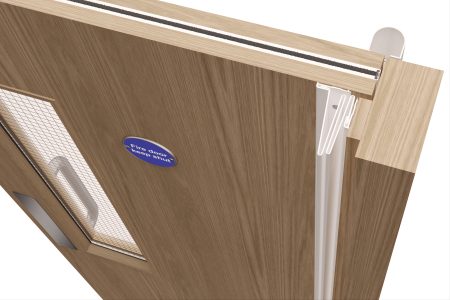
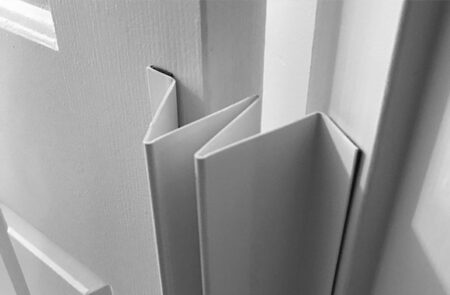
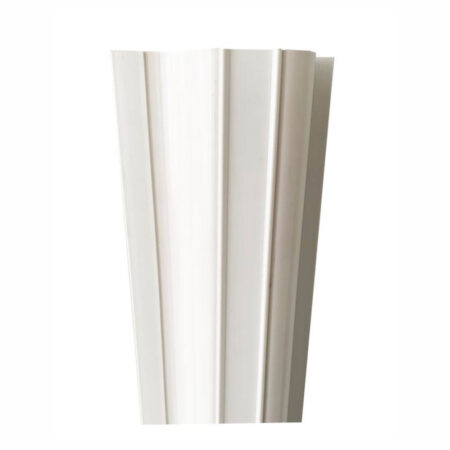
For high-traffic doors, hinge-side protection is usually the most important first step. Fingersafe USA’s Complete Set is designed to cover the hinged end of the door on both the push and pull sides, helping reduce access to the hinge gap while allowing normal door operation.
Control door speed
A closer that snaps shut increases risk. Facilities teams should adjust closers, repair latches, and fix doors that need to be shoved to close properly. A smooth-closing door is safer than a slam door.
Prioritize the highest-risk doors
Start with doors children use constantly: classrooms, bathrooms, cafeteria entrances, gym doors, playground exits, childcare rooms, and any door with a prior near-miss.
For schools and facilities teams, the Fingersafe USA shop is a useful starting point for comparing push-side, pull-side, and complete hinge-side protection options.
Keep rules simple
Behavior still matters, but it shouldn’t carry the whole safety plan. A good routine is short: hands away from hinges, one person holds the door from the safe side, no crowding at the frame.
The takeaway
Door edge injuries are painful and can be serious, especially when a door slams. But hinge-side injuries are often more dangerous because the hazard is hidden, the gap closes powerfully, and children naturally place hands there during busy movement.
For schools, childcare centers, and family spaces, the safest approach is clear: don’t wait for a serious injury to reveal the risk. Protect the hinge side, control the closing speed, and focus first on the doors children use most. That’s how a normal door remains exactly as it should be: part of the building, not the cause of the next emergency.