Choosing a door finger guard sounds straightforward until you are standing in front of a busy classroom door trying to answer one simple question: which side actually needs protection?
Most selection mistakes come from assuming the latch side is the danger zone. In real buildings, the hinge side is the problem. Door crush research has found fingers are often trapped on the hinge side in a majority of door-slam cases.
This guide breaks the decision down into four practical steps: identify the push side vs pull side, measure correctly, choose full-height protection where risk is highest, and make sure the install basics are solid.
Step 1: Identify the push side vs the pull side in 10 seconds
A lot of confusion disappears with one quick test:
- Push side: Stand facing the door. If it opens away from you, you are on the push side.
- Pull side: If it opens toward you, you are on the pull side.
The hinge side creates a narrowing gap as the door closes. That is where fingers get caught, especially during school transitions, bathroom rushes, and crowded entry moments.
Step 2: Match the guard type to the hazard
Most facilities teams will end up choosing between three setups:
Option A: Push-side protection (the common first move)
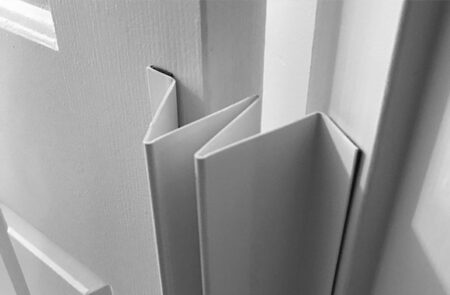
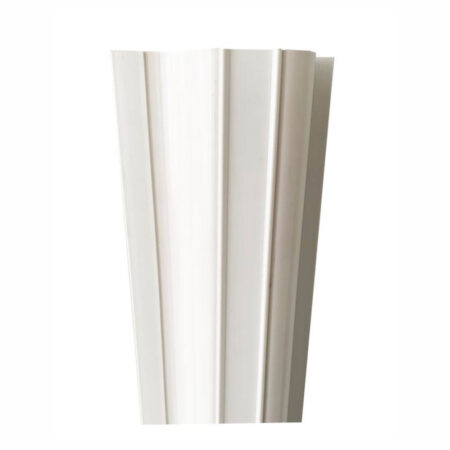
Fingersafe’s MK1-A door hinge guard covers the push side of the door with a flexible, accordion-shaped fitting designed to help prevent fingers from being trapped on the push side while allowing the door to operate normally.
Choose push-side protection when:
- Students or small children commonly move through the doorway in groups
- The door opens into a classroom, hallway, or shared space
- The push side is where hands drift as students hold the door for others
Option B: Pull-side protection (hinge barrels exposed)
Fingersafe’s MK1-B covers the pull side, where the hinge barrels are exposed. That pull-side exposure can create an additional pinch and snag risk because of the protruding hinge components.
Choose pull-side protection when:
- Children wait or cluster on the hinge barrel side during transitions
- The door swing puts hands near the hinge pin area
- The hinge barrels are noticeably exposed and accessible
Option C: Full hinge-side coverage (push and pull side)
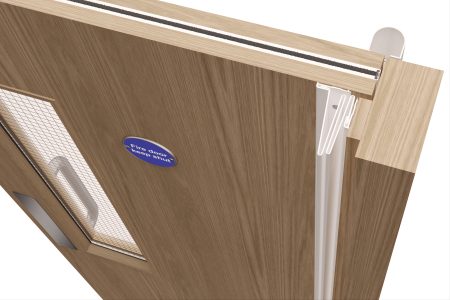
For high-traffic school doors, facilities teams often prefer a full coverage approach rather than guessing which side will be “the” problem. Fingersafe’s Complete Set protects the full length of the door at the hinged end and allows a wide opening range, with separate components for push side and pull side.
Choose full coverage when:
- The door is a high-use transition door (classrooms, bathrooms, cafeteria, gym)
- The door is heavy or self-closing
- The population includes younger students or higher-support needs groups
- The school wants consistent protection regardless of how the door is approached
Step 3: Get sizing right (this is where most projects go sideways)
Sizing is not complicated, but it has to be done consistently.
Fingersafe’s installation page recommends measuring from the top of the hinged side of the door to the bottom of the hinged side. It also notes that guards can be resized by cutting to size or requested as a custom cut.
Create a simple door schedule:
- Door location (Room 104, Main hallway restroom, Gym entry)
- Door height
- Push side, pull side, or both
- Notes (fire door, closer present, unusual hinges)
That one sheet prevents ordering errors and avoids installers improvising on the day.
Step 4: Install basics that prevent rework
A finger guard install fails for predictable reasons: the door is binding, the closer slams, or the mounting surface is dirty. Fingersafe’s fitting guidance emphasizes doing pre-install checks, making sure the door and frame are stable, and that the door closes easily before fitting.
Before installing:
- Confirm the door swings freely and does not rub
- Tune the closer so the door does not snap shut
- Clean mounting surfaces so fixings and adhesive seat properly
After installing:
- Open and close the door repeatedly at normal speed
- Confirm the guard does not interfere with latching or the closer
- Check for any gaps in coverage along the hinge side
Final thoughts
Choosing the right door finger guard is mostly about seeing the hinge side clearly. Identify push side vs pull side, decide whether high-traffic doors deserve full coverage, measure the door height consistently, and make sure the underlying door hardware is functioning properly before installation. Follow that sequence and the result is simple: safer doors that still behave like doors, even during the busiest moments of the school day.