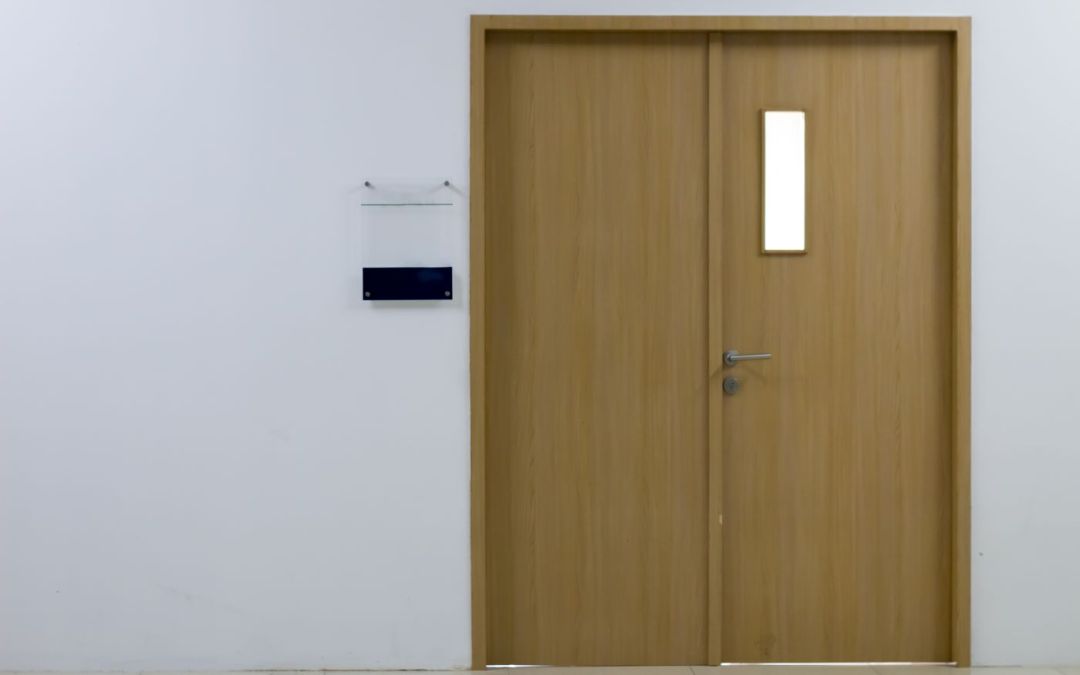
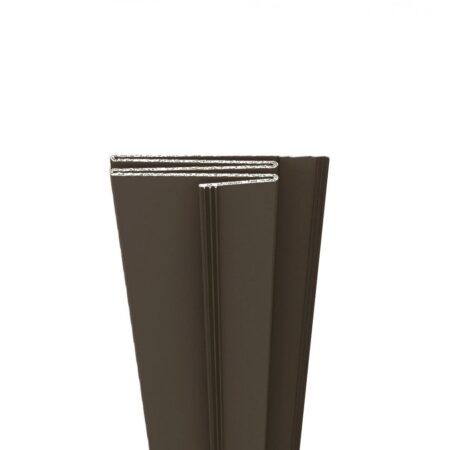
A door finger guard install is one of those jobs that looks simple until a school hallway reminds everyone what “high traffic” really means. Done well, hinge-side protection reduces a predictable injury risk without changing how the door works day to day. Done poorly, it can peel, bind, or leave a gap right where fingers still end up.
This guide is built for US facilities teams installing door finger guards for the first time, especially in schools and childcare settings. It focuses on practical steps, clean prep, accurate measuring, and a finish that holds up to daily abuse.
Step 1: Focus on High-Use Doors First
Start where injury risk concentrates:
- Classroom doors in younger grades
- Bathroom entry doors
- Heavy corridor doors with closers
- Cafeteria and gym doors
- Exterior doors used for recess transitions
If the team needs a tie-breaker, prioritize doors that close fast or slam. Those doors turn a pinch into a serious injury.
Step 2: Confirm which side needs protection: push side, pull side, or both
Most hinge-side protection planning gets stuck on one question: which side is exposed?
MK1-A covers the push side of the door and MK1-B covers the pull side where hinge barrels are exposed.
Facilities teams should walk each door and label it simply:
- Push side protection needed
- Pull side protection needed
- Both sides (common on high-risk doors)
This keeps ordering and staging clean, and avoids a day of “wrong part on the wrong door.”
Step 3: Measure properly (it is faster than fixing mistakes later)
Measure from the top of the hinged side of the door to the bottom. We explicitly recommend measuring this way for hinge guard sizing.
If the team is ordering for multiple doors at once, create a simple door schedule:
- Door location
- Door height measurement
- Push side, pull side, or both
- Notes (fire door, unusual hinges, frame type)
Step 4: Check the door and hinge conditions before installing
Finger guards do not fix a bad door. They amplify it.
Before installing, check:
- Door alignment and swing (no rubbing)
- Closer speed (not snapping shut)
- Hinges seated and secure
- Frame condition (clean, not flaking paint)
If the door is binding or slamming, tune the closer and address alignment first. The guard should finish the job, not fight a mechanical problem.
Step 5: Gather tools and stage the work
A practical kit for a school install usually includes:
- Tape measure and pencil
- Utility knife and straight edge (for trimming)
- Drill, bits, and correct fixings
- Screwdriver set
- Cleaning supplies (more on that next)
- Step stool or ladder
- PPE as required by site policy
Stage doors by zone so the team can work efficiently without bouncing across the building.
Step 6: Clean the surfaces like it matters (because it does)
Most early failures are prep failures.
Clean the mounting surfaces on the door and frame so tape and fixings are seated properly and remove dust, grease, and residue. Let surfaces dry fully before positioning the guard.
If the team is working in older buildings, check for loose paint. If paint is peeling, adhesion will fail on top of it.
Step 7: Dry fit and position before final fixing
Use the guard to confirm:
- Full coverage of the hinge-side gap
- No interference with hinges or the door swing
- Consistent spacing top to bottom
If trimming is required, follow the manufacturer’s trimming guidance and cut cleanly.
Step 8: Fix in the correct sequence and test the door
Install according to the product’s instructions for screw placement and order. Then test:
- Open and close the door slowly, then at normal speed
- Confirm the guard does not bind, peel, or catch
- Check the latch and closer behavior
- Confirm the hinge-side gap is protected through the full swing
Test the door the way students use it, because they will.
Step 9: Fire doors need extra discipline
If the door is part of a fire door assembly, treat it as a compliance-sensitive install.
NFPA 80 requires fire door assemblies to be inspected and tested after installation and at least annually, with records maintained for the AHJ.
That means facilities teams should:
- Confirm the product and method are appropriate for the fire door application
- Avoid changes that interfere with latching, closing, or clearances
- Document what was installed and where, then include it in inspection records
Step 10: Document, then maintain
After installation, log:
- Door location and type
- Product installed (push, pull, or both)
- Install date
- Installer name/team
- Notes for follow-up
Then treat guards like any other safety hardware.
A simple maintenance cadence works:
- Quick visual checks monthly in high-traffic areas
- Re-check fixings after the first week of heavy use
- Inspect after any door repairs or closer adjustments
The takeaway
A first-time install goes smoothly when the team prioritizes the right doors, measures correctly, preps surfaces properly and tests every door as it will be used. For schools, the best approach is phased: protect the highest-risk doors first, then expand building-wide once the team has a repeatable method that holds up to daily traffic.