In 2026, classroom doors are doing more jobs than they used to. They are still the thing students swing through a hundred times a day, usually without thinking. But they are also part of the school’s security plan. More districts are tightening access at entrances, upgrading locking hardware, and adding door monitoring so staff can react faster during an incident.
That security shift is understandable. It is also quietly changing everyday injury risk inside the building.
Because when door use changes, door injuries change too.
So, the real question for schools is not “security or safety.” It is “how to do security without creating new daily hazards.”
What is changing in school security, specifically around doors
Security guidance and industry standards are putting more emphasis on door control, lockdown capability, and monitoring. The Partner Alliance for Safer Schools (PASS) released Version 7 of its K-12 safety and security guidelines in 2025, with expanded guidance on secure entry points, duress alarms, and detailed coverage of door and locking considerations.
At the district level, schools are also exploring practical add-ons like door alert sensors and systems that flag propped doors, alongside other screening measures. On the classroom side, meanwhile, the trend is clear: doors that can be secured quickly from inside, with hardware that supports lockdown without forcing staff into the hallway.
All of that can be done well. But it has consequences.
How security upgrades can increase everyday injury risk
1) More doors stay closed more often
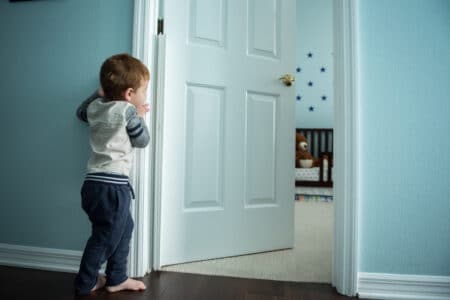
When schools tighten access, they tend to keep more interior doors closed, latched, and sometimes self-closing. That means more frequent opening and closing during transitions, and more opportunities for small hands to drift into hinge gaps. This is the boring reality of school life: more closed doors equals more door cycles.
2) Heavier hardware and faster closing doors raise pinch force
Security-focused doors may be heavier, more robust, and more likely to use closers. If closers are set too fast, or latches require extra force, doors slam. A slammed door can turn a minor pinch into a major injury.
3) “Do not prop the door” can create frantic last-second door grabs
Schools often crack down on propped doors for security reasons. Good. But if the only alternative is a door that closes quickly behind a group, students start catching doors with hands, feet, backpacks, and whatever else is nearest. Fingers end up near hinges because that is where students brace themselves.
4) Locking must meet life safety and accessibility rules, which limits some “quick fixes”
There is still a lot of confusion about what is allowed on classroom doors. In the US, classroom locking has to balance security with egress, accessibility, and emergency response requirements.
The practical goal in 2026: secure doors that are also “kid-proof” at the hinge side
Security planning often focuses on the outside of the door. Injury prevention often needs to focus on the inside of the hinge gap.
The hinge side is a known pinch point in door crush injuries. So if a school is investing in stronger security practices, it should budget for hinge-side protection and door behavior tuning at the same time.
Not later. Not after the first incident.
What schools can do now to reduce risk fast
1) Identify the “security-upgraded doors” and treat them as high priority for pinch-point prevention
Make a quick list of doors that have been recently upgraded for security or are used as part of lockdown procedures:
- Classroom doors with newer locks or closers
- Corridor doors used for compartmentalization
- Doors in new secure vestibule pathways
- Any door that now stays closed and latched more often
These are the doors where daily finger injuries can quietly rise.
2) Fix door closing speed and slam conditions as a security and safety issue
A door that slams is a security failure and a safety hazard.
Fast checks that usually pay off:
- Adjust closer speed so the door closes in a controlled way
- Fix latching alignment so the door does not require a hard push to latch
- Inspect hinges and frames for movement that changes clearances
This is basic facilities work, but it prevents the most avoidable injuries.
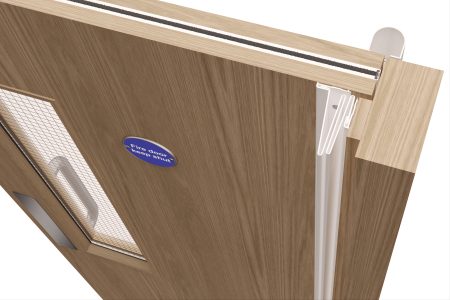
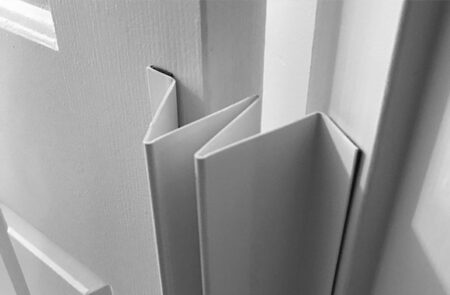
3) Add hinge-side finger protection where kids actually get hurt
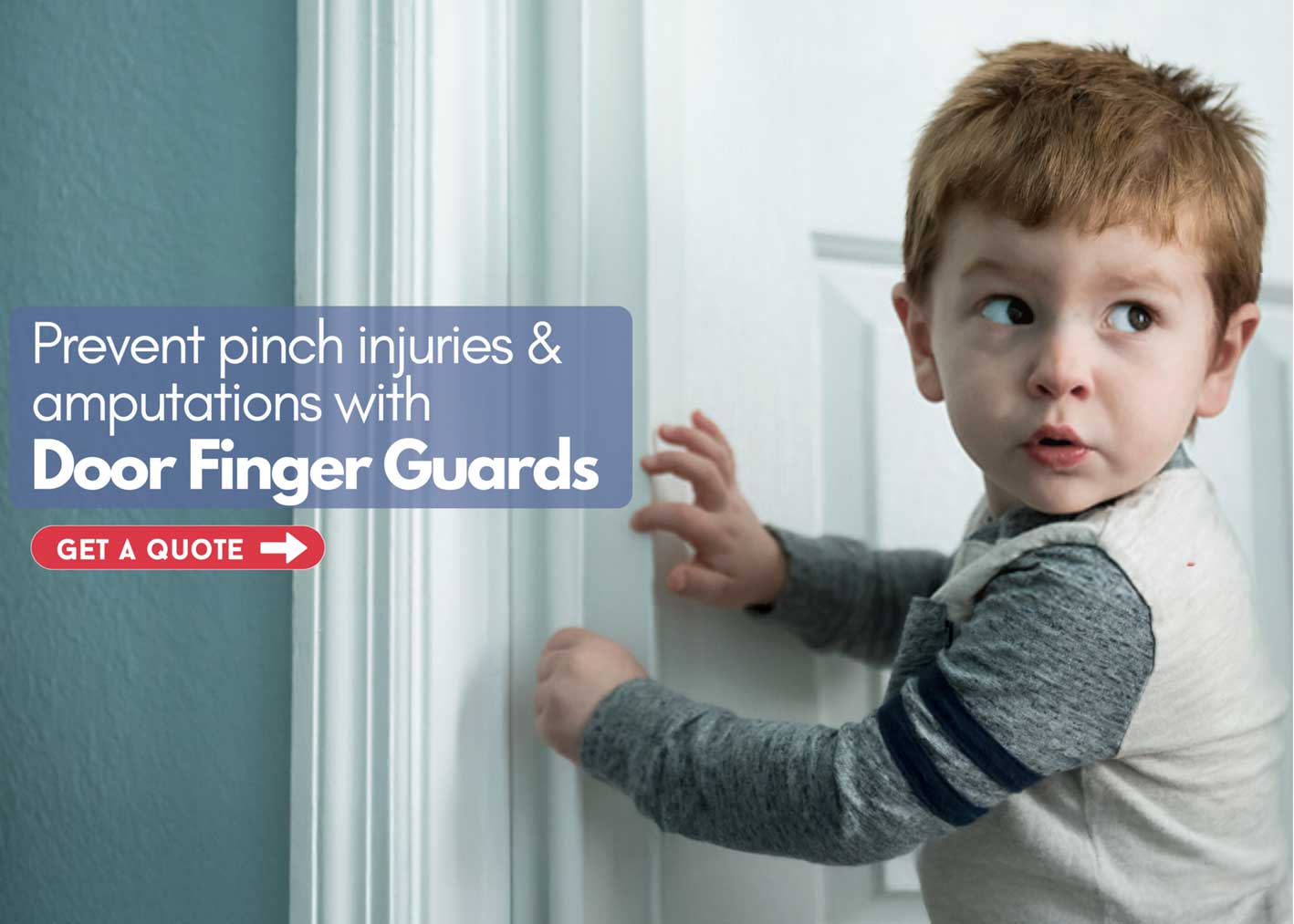
For everyday injury prevention, hinge-side protection is the highest-value control because it targets the pinch point children most often encounter.
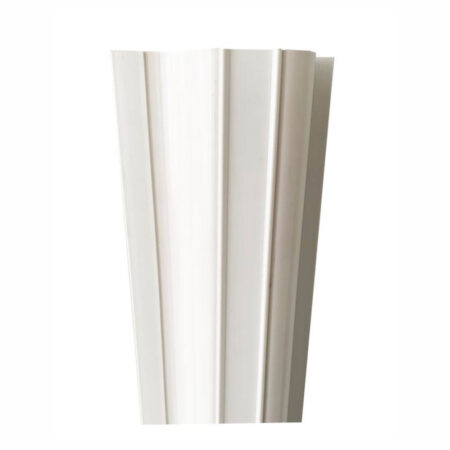
Fingersafe USA’s commercial door finger protection is designed to cover the hinge-side gap, including full coverage options that address both sides of the door where needed.
The important part is the strategy, not the brand name: protect the hinge side on the doors with the most traffic and the most closing force.
A good first wave in most schools is:
- Kindergarten and lower elementary classroom doors
- Bathroom doors near high traffic corridors
- Heavy corridor doors with closers
- Cafeteria and gym doors
- Doors used during arrival and dismissal funnels
4) Replace “perfect behavior” expectations with a simple transition routine
Security practices already demand routines. Injury prevention can piggyback on that without becoming another lecture.
One simple habit helps:
- One student holds the door from the safe side
- Nobody places hands near the hinge side
- No pushing through clustered doorways
That is it. Short enough to repeat. Clear enough to enforce.
5) Watch out for the “barricade drift” problem
When staff feel anxious, they improvise. That can lead to improvised barricading or adding devices that were never vetted.
Schools should align classroom lockdown capability with recognized guidance and code expectations, rather than letting ad hoc hardware appear door by door.
This is not just a security issue. Improvised locking can create injury risk during everyday use and complicate emergency egress.
The bottom line: security doors should not create injury doors
The direction of travel is clear: more controlled access, more door monitoring, and faster lockdown capability.
Schools can adopt those practices and still reduce daily injuries by treating door safety as part of the same upgrade package:
- Tune door closing behavior
- Protect hinge-side pinch points on high-traffic doors
- Keep locking solutions code-aligned and responder-friendly
- Build a transition routine that works even when the hallway is busy
A classroom door should be secure in a crisis. It should also be safe at 10am when twenty students are trying to get to the bathroom at once.