Ask five people in a typical school “who’s responsible for checking the doors?” You’ll probably get five perfectly reasonable but incredibly different answers.
A teacher might assume it’s the job of the caretaker and that same caretaker might assume it’s the job of the department head. The principal might even think it’s their responsibility (isn’t everything?) but they’re not 100% sure.
It’s one of those things that everyone cares about but everyone assumes is somebody else’s job, and that means the responsibility can sometimes be lost entirely. That is how problems are created and when there is a problem, nobody wants to claim responsibility, so the cycle continues anew.
The only way to truly nip the problem in the bud is to create a proper chain of responsibility to map a clear route from spotting something faulty to making it safe.
When everyone is responsible, nobody owns it
There is a lot of responsibility at play in any school. Teachers are responsible for the students, and caretakers are responsible for the building. That combined responsibility and subsequent wisdom should be a strength rather than a crutch.
The troubles usually surface when reports are mistaken for actions. “The cafeteria door is slamming again” can often spread from teacher to teacher and department to department with the initial reporter assuming the problem has been passed on to someone else. But the can keeps being kicked down the road until somebody finally takes ownership of it and even then, nobody can be sure exactly who decided to finally do something about it.
A clear chain of responsibility does not mean blaming one person for every hinge on every door in the school. It means every concern has a visible owner at each stage, along with a deadline and a final check.
The eyes of the system
Teachers usually notice problems first because they use the building while it’s busy, and know which classroom door children race through after recess and which bathroom door starts vibrating whenever the air conditioning kicks in. They hear the students complaining that a door is “too heavy” long before it appears on a formal inspection and long before there has been an accident.
Their job shouldn’t be to diagnose a problem but to recognize that something’s changed and report it through the agreed channels. It should go without saying that a door that slams, scrapes, wobbles, fails to latch or needs an extra shove to open properly deserves attention. So do exposed hinge gaps, loose handles, and damaged finger guards. If you need any further help, Fingersafe USA’s school door safety checklist provides a useful starting point for what staff should notice during ordinary routines.
Any of these problems should be immediately reported with a room number, short description, and a level of urgency. A quick photograph wouldn’t go amiss either, if your school allows smartphones.
Every report needs a destination
Even the best of staff can lose track of hazards given the sheer amount anyone working in a school has on their plate at any one time. That means one simple and elegant reporting route is always the best idea. This could be anything from a straight forward digital system, a dedicated form, or even a dedicated email address. As long as everybody knows where to send the report and how to send it, there is less chance of it being lost in the shuffle.
Each report should also create a solid record rather than just relying on a potentially loose memory. “Door broken” won’t help much. “Room 118 corridor door slams during the last few inches” gives the facilities team somewhere useful to start. Specificity is the mother of results here.
There should also be somebody on the team who is mandated to review these reports and decide on how urgent they are. A squeaky door, for example, is naturally less urgent than an exposed hinge gap that could easily trap a finger. Any previous injuries or near misses should obviously move reports even further up the priority list.
Where a door presents an immediate risk, a note should also be made and spread amongst staff as they might need to reroute students, supervise the doorway, or temporarily restrict access.
Facilities staff need authority as well as a toolbox
Once a report reaches the facilities team, they should then start a thorough inspection of the entire offending doorway rather than simply silencing the obvious symptom and moving on. A door that won’t latch may have a misaligned strike or be sagging on worn hinges, or a finger guard pulling away might have been badly fitted. The immediately visible fault isn’t always the whole fault.
Good facilities work also means ensuring that all accessible doors are subject to state and nationwide requirements and standards. The US Access Board’s ADA Standards, for example, require covered door closers to take at least five seconds to move from 90 degrees open to 12 degrees from the latch.
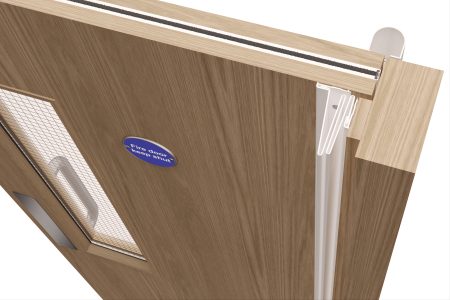
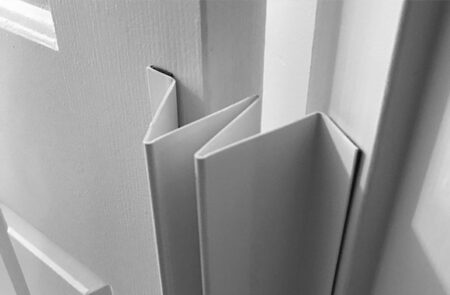
Finger protection belongs in the same maintenance conversation. Before installing anything, the door should open, close and latch correctly. Fingersafe USA’s installation guidance explains why alignment, hinge condition, and closer behavior should always be checked before a guard is fitted. A guard might protect the pinch point, but it can’t fix a mechanically unsound door.
Administrators decide whether the process has teeth
It’s not as if the principal should be checking every hinge themselves every single day. They do, however, have responsibilities when it comes to keeping the system in place and that everyone understands how to properly use it.
That includes naming a door safety lead, setting a list of response expectations, and deciding who can authorize an emergency repair and who has to ask who for permission. A policy telling staff to report hazards is hollow if the facilities team has neither the budget nor the authority to respond to it.
Administrators should also look for patterns. Because if the same door appears in several reports or if guards are repeatedly being damaged in the same corridor, the school may have a wider issue to solve.
Principals should, of course, also ensure that all door safety records show what was found, who received it, what action was approved, and when the work was checked. These records also help the next person understand the history of a stubborn door without the need to start from zero.
Close the loop with the person who raised the concern
This small step is the final one in the chain that’s often missed out. A teacher reports the door, facilities teams repair it, and nobody tells the teacher what happened. A week later, they’re still wondering whether it’s safe.
The original reporter should always receive a short update explaining not only that the problem was fixed but how it was fixed and if any safety restrictions need to remain in place. The work order should only close after somebody in authority and the original reporter themselves verifies the result.
Children can speak up, but adults retain responsibility
Students are often the ones who really know which doors slam and which ones everyone avoids. Make it easy for your students to inform a staff member if things feel unsafe, otherwise it’s left to idle gossip and chance.
Children shouldn’t carry the burden of preventing an injury, though, particularly younger children. They have agency but their safety is still your responsibility. Reminders can help, but a safer doorway is a protective measure that works even when a child is distracted, excited, or simply forgets themselves. That’s why well-maintained hardware and passive hinge protection matter.
Make every link visible
Doors are an essential and undeniably ordinary part of our lives but the damage they can inflict is certainly not ordinary. Don’t let that slamming door or loose latch become a part of the morning clatter that fades into static. A damaged or improperly guarded door can be a ticking time bomb in an environment as loud and chaotic as a busy school. So don’t let today’s niggling little annoyances become tomorrow’s severed fingertips!
A clear chain of responsibility turns a passing comment into a recorded concern, a concern into a repair and a repair into a result that protects everyone, including the staff. Most importantly, it makes sure the children themselves never have to discover the problems and live with the consequences of those problems themselves.