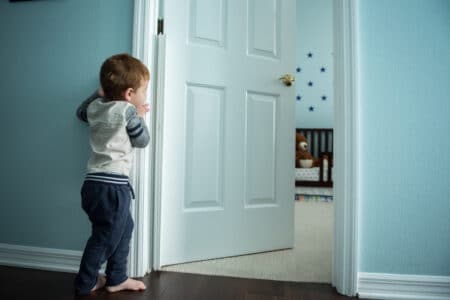
Returning to school after a serious finger injury can feel like a major step. The bandages may be smaller and the pain may be easing, but the child can still remember exactly how the accident felt.
Now every classroom entrance, bathroom door, and noisy hallway can seem different. A slamming door may make them jump. They might hesitate at the hinge side, refuse to touch a handle, or wait for somebody else to go first. That isn’t stubbornness or attention-seeking. It’s a very understandable response to something frightening.
The goal is not to make a child “get over it.” It’s to help them feel safe, capable, and independent again, one manageable step at a time.
Start with the physical recovery plan
Before the child returns, parents and school staff should be clear about any medical restrictions. Can they write comfortably? Should they avoid sports, climbing, or carrying a backpack? Do dressings need to stay dry? Who should they see if pain or swelling increases?
The child’s healthcare professional should guide these decisions. Our article on recognizing a more serious door-related fingertip injury also explains why damage involving the nail bed, bone, or soft tissue may need ongoing attention even when the finger looks better from the outside.
Share the plan with the school nurse, teacher, and staff supervising recess or transitions. Keep it simple enough that the child doesn’t have to repeat their story all day.
Expect doors to feel different for a while
An injury can change how a familiar environment feels. The National Child Traumatic Stress Network explains that children may become distressed by sights, sounds, or places that remind them of an injury. Some become jumpy around sudden noises, while others avoid the place or activity connected with what happened.
For a child injured in a doorway, the reminder may be the click of a latch, the hiss of a closer, or the sight of a widening hinge gap. Don’t dismiss that reaction with “it’s only a door.” To the child, it may be the clearest reminder of a moment when they weren’t safe.
Listen without turning every conversation into an interrogation. A calm “I can see that door made you nervous” is often more helpful than insisting there’s nothing to fear.
Make the first day predictable
Confidence grows when the child knows what’s going to happen. Agree on who’ll meet them, which entrance they’ll use, and who they can approach if they feel worried. If possible, visit at a quiet time and walk to their classroom without a crowd behind them.
A temporary plan might allow the child to enter before the hallway gets busy, use a quieter doorway, or have an adult hold particular doors. These adjustments shouldn’t become permanent restrictions unless they’re medically necessary. They’re a bridge back to normal routines.
The child should also have a discreet way to ask for help. That could be a phrase, hand signal, or simple agreement that they can pause rather than being hurried through a doorway.
Rebuild confidence in small, successful steps
There’s a difference between encouragement and pressure. Forcing a frightened child to operate a heavy door to prove they’re “brave” can make the doorway feel even less safe.
Instead, begin with a calm, well-maintained door and a trusted adult nearby. The child might first watch the door move, then walk through while an adult holds it. Later, they may push it partly open or use it independently. Let their medical restrictions and emotional response set the pace.
The NCTSN offers a practical resource for dealing with reminders of a medical injury, while the pediatric guidance at After the Injury recommends reassuring children that they’re safe, allowing them to discuss worries and helping them return to familiar routines.
Progress may look uneven. A child can manage several doors confidently, then freeze when one slams nearby. That doesn’t erase what they’ve achieved. It simply shows in which situations the child still needs support.
Make the doorway genuinely safer
Reassurance only works if adults have addressed the original hazard. The door involved in the injury should be inspected before the child returns, along with similar doors nearby. Check the closer, hinges, latch, frame alignment, and exposed pinch points. A door that still slams or sticks won’t inspire much confidence, however carefully adults explain it.
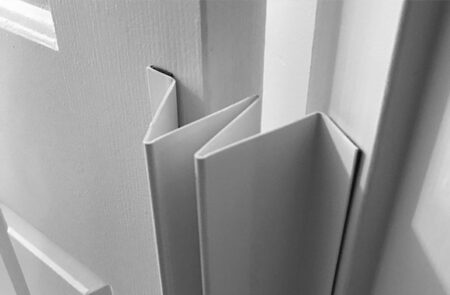
Fingersafe USA’s door safety guidance outlines common warning signs, including wobbly hinges, excessive effort, and badly adjusted closers. Where children can reach the hinge-side gap, passive protection can remove the hazard without requiring perfect concentration or constant adult supervision.
A complete push-side and pull-side finger guard system can protect the hinged end while allowing the door to operate normally. That physical change sends an important message: the adults listened, took the accident seriously, and made the environment safer.
Protect dignity as well as fingers
A returning child doesn’t need to become “the one who got their finger trapped.” Brief the necessary staff, but don’t share medical details more widely than required. Ask the child how they’d like questions from classmates handled and avoid making their first trip through a door into a public test.
Keep watching for persistent nightmares, panic, physical reactions to reminders, extreme avoidance, or fear that interferes with school and everyday life. If those reactions continue or worsen, parents should speak with the child’s pediatrician or an appropriately qualified mental health professional.
Recovery isn’t measured by how quickly a child stops talking about the accident. It’s measured by the return of trust: trust in the door, trust in the adults responsible for it and, eventually, trust in their own ability to move through school independently.
The best return plan combines patience with practical action. Listen to the child. Follow the medical advice. Make transitions predictable. Fix the hazard. Then give confidence the time and space it needs to come back.