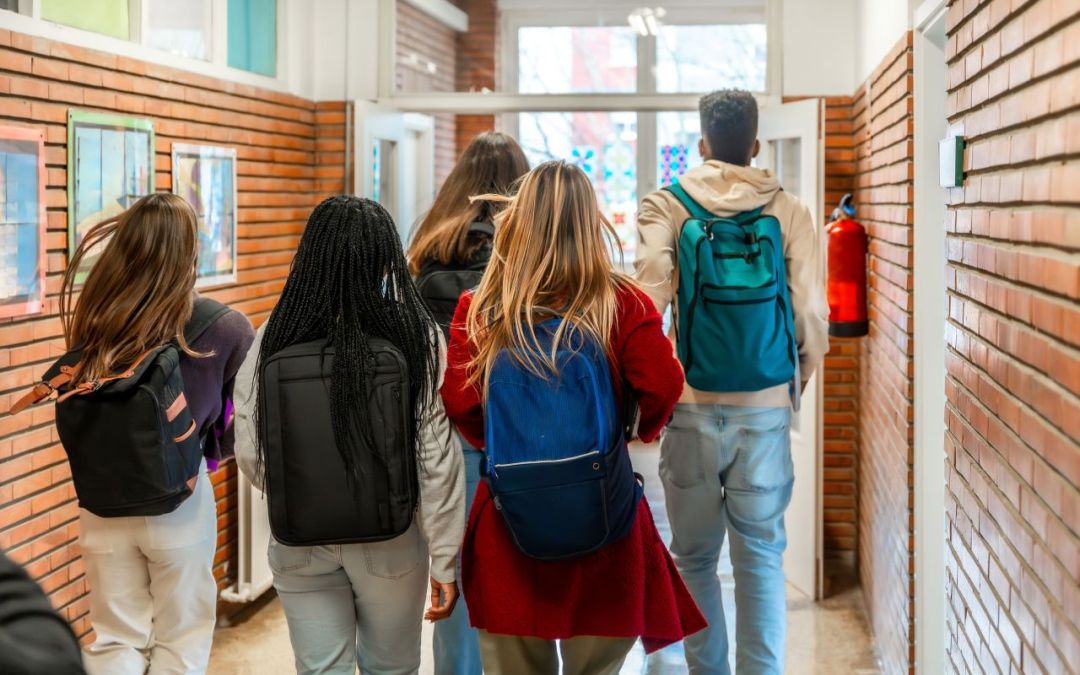
A school entrance looks very different in October than it does in August. Everyone is wearing thicker coats, backpacks are spilling over with extra clothes and hats, gloves and everything else are dropping to the floor as kids rush to escape the autumnal chill.
The doorway hasn’t changed, but the people moving through it have. That can make a school entrance that felt comfortable and manageable at the start of the year feel much more awkward and more dangerous by fall.
Why bulky clothing changes the doorway
A winter coat adds major bulk around a child’s shoulders and arms, making it harder to turn sideways, reach a handle, or slip through a closing door. Gloves may also change how securely a child can grip handles, leading to potential slippages and injuries. Then there are those loaded backpacks, which can easily catch on a doorhandle or even another student and the results could be chaotic.
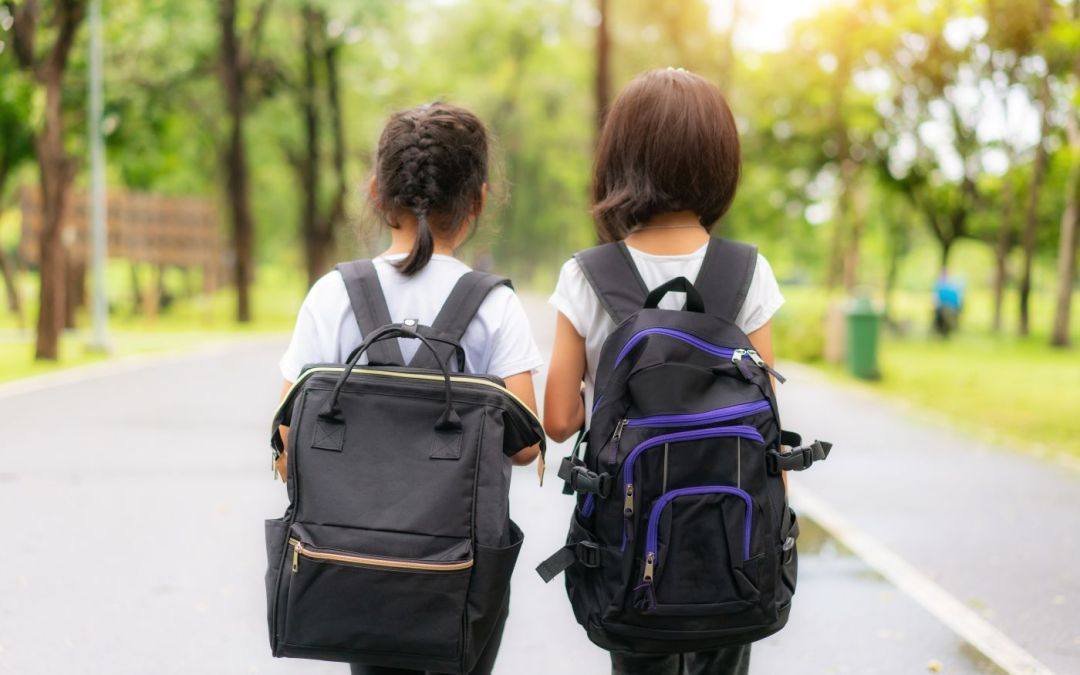
The American Academy of Pediatrics’ backpack safety guidance recommends two padded shoulder straps and placing heavier contents near the center of the child’s back. Schools can help by reducing what students carry, and giving them somewhere safe and calm to remove wet coats and reorganize bags after they’re safe inside.
Crowding turns small difficulties into a bigger risk
Most students can manage a coat, backpack, and door when they have ample time and space but morning arrival rarely provides much of either, particularly in colder months.
We’ve already explored why door injuries become more likely during busy school transitions and during October, those transitions are likely to be even busier than usual. Fall arrival brings the same ingredients together: repeated door movement, divided attention, excited children, and the pressure to keep everybody moving quickly and safely. Those are two words that rarely go well together.
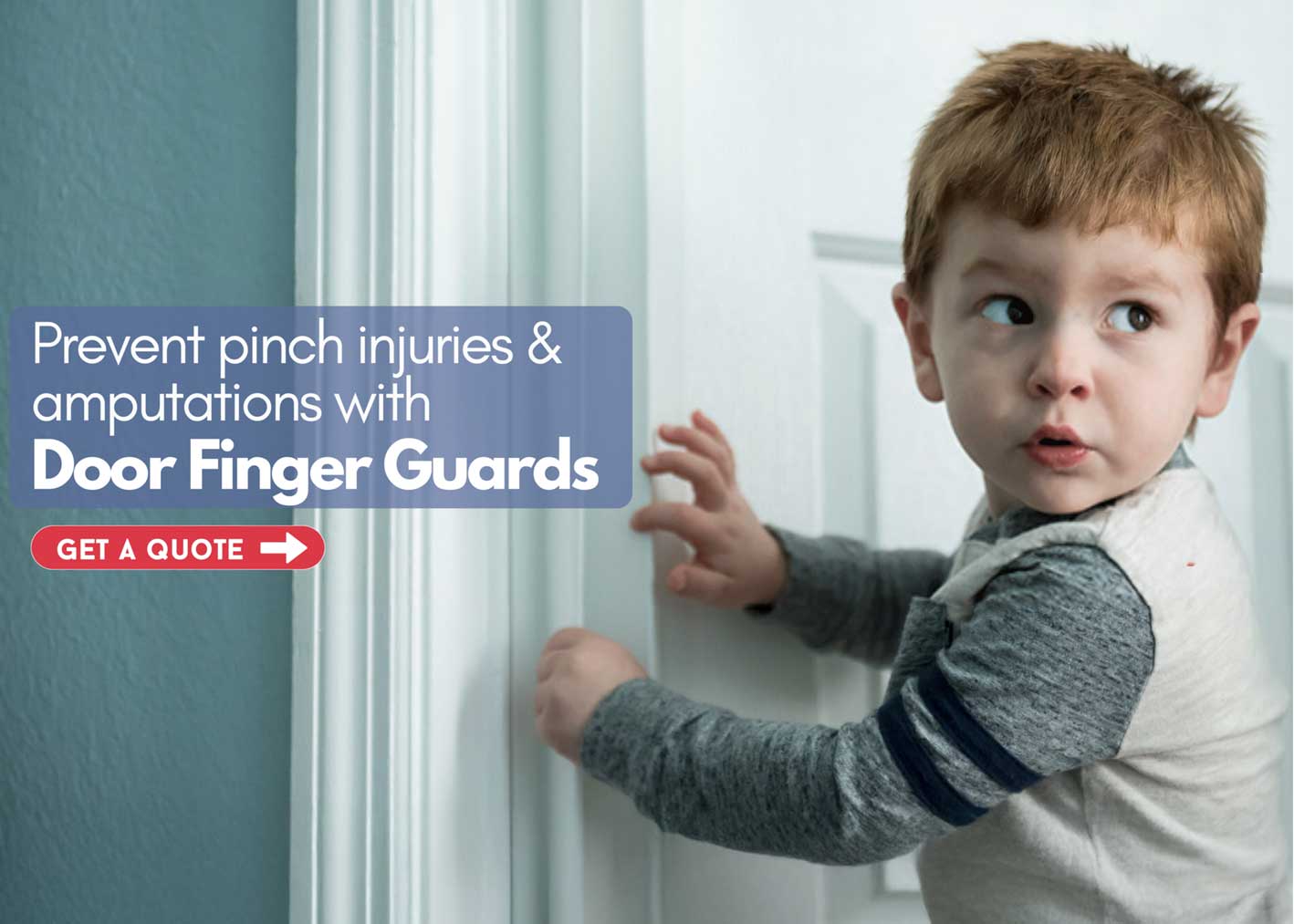
The hinge side of the door deserves particular attention as a child waiting beside the frame may rest a hand against it while adjusting a backpack. If the door closes, the exposed gap collapses with very little warning and if a child’s hand gets caught in that gap the results can be truly disastrous.
Watch the entrance when it’s actually busy
An entrance can look deceptively calm during an inspection when the kids are either in class or at home. The real test needs to happen in the first ten minutes of the morning when kids are rushing in out of the potentially unruly weather.
Notice where they stop to remove their coats, hats and gloves, where they wait for their friends, and where accidents tend to happen. This could be anything from backpacks catching on door handles to children reaching out for a door that’s still closing. These are all potential breeding grounds for injury.
Thankfully, the chaos can be mitigated. Sign-in tables, trash cans, and temporary displays can and do gradually creep into the chaotic circulation space. They should not be allowed to push students toward the hinge, or reduce accessible manoeuvring room, and the US Access Board’s ADA Standards include requirements for clear routes and maneuvering space around doors.
A modest change could ease the pressure without causing confusion. Moving the check-in point farther inside, for example, or opening a second approved entrance. Even simply positioning a trusted adult just beyond the doorway can stop it becoming a brutal bottleneck.
The door still needs to do its job
Better traffic flow won’t compensate for a door that slams, speeds up, or needs to be forced shut. Entrances should be checked as the weather changes because wind, pressure differences, and heavy use can expose problems that weren’t obvious in the radiant summer months.
Our door safety guidance recommends checking closing action, hinges, and surrounding hardware rather than waiting for something to fail. Any entrance that forms part of a fire, security, or accessible route should be adjusted by someone who understands the relevant requirements.
Where students can reach the hinge gap, passive protection addresses a risk that supervision alone can’t reliably control. A complete push-side and pull-side finger guard system can cover both accessible sides while allowing the door to operate normally.
Make room for the real fall morning
Children are never going to arrive at school in a neat single file with empty hands and perfectly adjusted backpacks. They’ll arrive in chaos whether we like it or not, and that chaos will only be amplified at this time of year. Any sensible plan starts by simply acknowledging that reality. If you want to learn more, contact us today to discuss door safety at your school.